The last bus came in June.
For fourteen years something pulled up at your curb and took your kid somewhere with people in it. Then they aged out, it stopped, and nobody warned you it would be that abrupt.
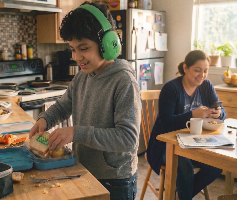
They are home now. They are in their room now.
They are on the same three websites they were on yesterday, and they seem fine, which worries you more than unhappy would.
You started counting last month. How many people did they speak to this week who were not family and not being paid to be there?
Some weeks the number is zero.
You have gotten good at not saying that out loud.
Meanwhile everybody who loves you keeps handing you the same sentence:
They seem happy at home.
The hard part is that sometimes it is true.
Plenty of autistic adults want less socializing than the people around them, and that is a real preference, not a problem to fix. If that is genuinely true, this article is not for them.
This is for the other one. The one who says no to everything, and then asks you in the car, in April, whether anybody from school ever asks about them.
They did not choose this. They ran out of rooms.
Here is what this article hands you.
- Ten real places an autistic adult can be around other people, with what each costs and who pays for it.
- The one question to ask before you sign them up for anything.
- What your Regional Center still funds after 22, which most families stop asking about.
And one number to collect at the end, plus the only move you make once you have it. That part is short, and it is the opposite of what most families do.
Start with the question, because it rules out about half of what you will find. Before you sign them up for anything, ask: does this happen again next week?
A one-time event is a day out. A thing that lands on the same night, in the same room, with the same faces, is where a person gets known.
So cross off the festivals, the resource fairs, and the one-off mixers. They are the easiest to find, they are the most advertised, and they build almost nothing.
Why did their world get so small after high school?
Because school was doing work nobody ever named. For fourteen years it handed them a room, a schedule, a reason to be in the building, and the same people in it every day, for free.
Nothing in adult life does that on its own. Adults have to build the room.
And the thing that makes a room work is the same at 30 as it was at 6. There has to be a reason to be there that is not "socializing." A game with rules. A shift with a start time. A class with a syllabus. A team with a season.
Give an autistic adult a reason to be in the room and they can stay two hours. Ask them to mingle and they last nine minutes, correctly, because mingling is a skill almost nobody has.
Every place below has a reason built into it. That is why it is here.
Which of these fits my adult child?
Ten places, sorted by how much paperwork stands between them and the door. Four of them need none.
| Place | Who it fits | What it costs |
|---|---|---|
| Special Olympics sports | 8 and up, no upper limit | Free |
| An autistic-led social group | 18 and up | Usually free |
| A tabletop gaming table | Teens and adults | Free to modest |
| Best Buddies Citizens | Adults, any age | $15 background check |
| Social recreation your Regional Center funds | Any age | Free, no copay allowed |
| A day program that goes out into the community | 18 and up | Regional Center funded |
| A social club with staff in the room | Roughly 18 to 30 | Ask the program |
| A community college class | 18 and up | Low, and often funded |
| A volunteer shift that repeats | Any adult | Free |
| A job with coworkers | 18 and up | Free to you |
Four rooms an autistic adult can walk into this month
No paperwork, no eligibility, no waiting for a meeting. These four are the ones to try while everything else is still being arranged.
1. Special Olympics sports, which never age you out
Special Olympics Southern California runs 13 sports for nearly 25,000 athletes across 11 counties. Sports start at 8 and there is no upper age limit, and the whole thing is free to athletes and their families.
The season is the reason to be there. Practice is on the same night, the roster is the same people, and by week four somebody notices when they are missing. That is the part no social skills group can manufacture.
Eligibility runs through intellectual disability. Register as an athlete and staff will tell you what is training near you.
2. An autistic-led social group
These are run by autistic adults for autistic adults, they are usually free, and almost nobody hands parents the list. Los Angeles Neurodiversity has run since 2014, has close to a thousand members, and neurodivergent people lead it. Expect peer support groups, outings, and online meetups across Los Angeles County.
Worth saying plainly: this is the one where nobody treats them like a client. For an adult who spent fourteen years as somebody's caseload, that is the whole appeal.
3. A table with dice on it
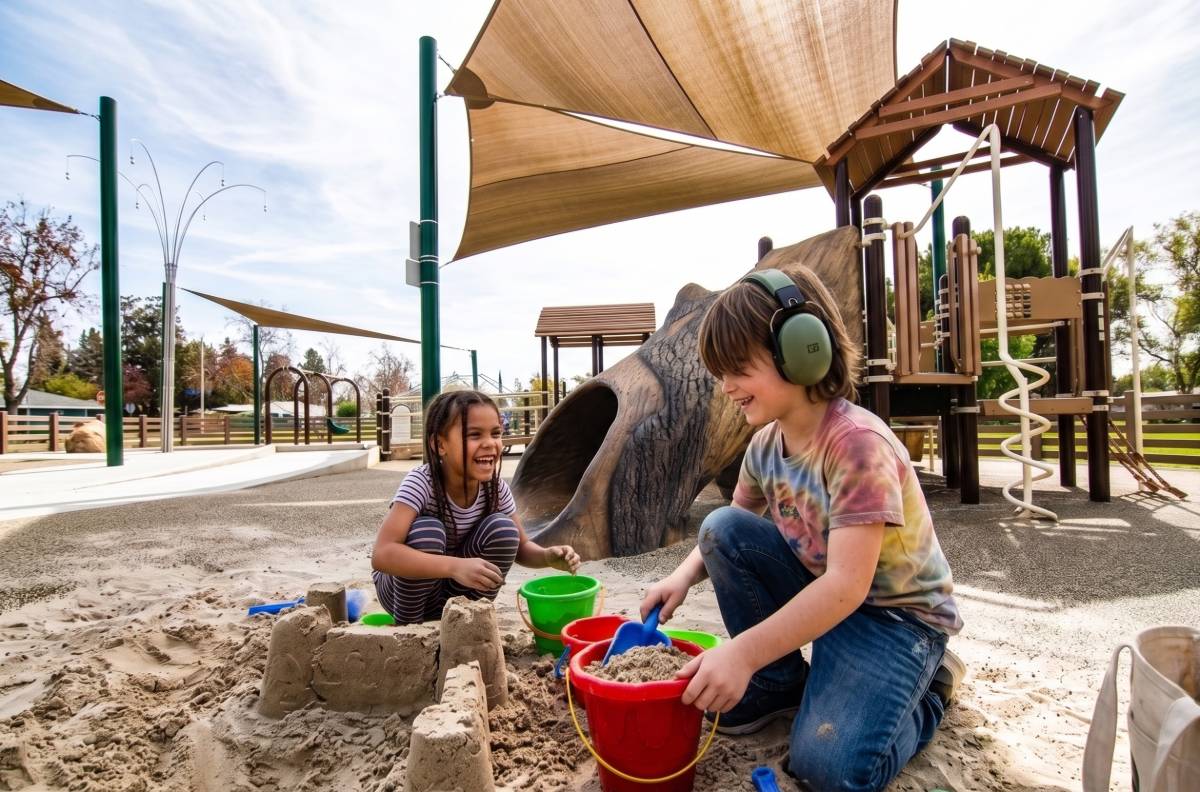
Tabletop games are the strongest reason-to-be-there on this list, because the rules do the social work. Whose turn it is, how long you talk, when it ends: all of it is written down. Nobody has to read a face.
A 2024 study in the journal Autism ran a six-week campaign with a small group of autistic adults, then asked them about it. What came back was connection without masking.
Ask the game shop nearest you when open D&D night runs, and check the library too. For a trained adult at the head of the table, Game to Grow keeps a directory of certified game masters, many of them online.
4. Best Buddies Citizens
Best Buddies is best known for its high school chapters, but Citizens is the adult version, and it does the same thing: one person with a developmental disability matched one to one with a person without, on where they live and what they are into.
Matches run at least a year and the pair meets in person at least twice a month. The only cost is a $15 background check.
This is the one on the list built to produce a specific named human being who texts them. Nothing else here promises that.
What will my Regional Center pay for an adult?
More than most families ask for, and the asking is the whole problem. Services do not stop at 22. What stops is the school district's involvement, and a lot of parents read that as everything ending.
5. Social recreation, which came back and nobody told you
California cut social recreation and camp funding in 2009 and brought it back in 2021. Twelve years is long enough that most families stopped asking, and plenty of service coordinators stopped offering.
It can fund swim, art, dance, music, sports, clubs, camp, and the travel to get there, for adults as well as children. Your Regional Center is not allowed to charge a copay for it, and it cannot make you trade away other services to get it.
Ask for it by name at the next planning meeting and say what you actually want. Our piece on what to ask for at an IPP meeting has the wording, and the IPP is simply the written plan listing what your Regional Center is funding this year.
6. A day program that goes out into the community
Ask what the day actually looks like before you tour anywhere, because programs differ enormously. Some are a building they sit in. Others are a schedule that takes them out into real places.
New Horizons in North Hills serves adults 18 and up across the San Fernando and Santa Clarita Valleys, with day services, volunteering, and employment support. Tierra del Sol in Sunland runs working art studios where adults build real portfolios, exhibit, and sell through a gallery in West Hollywood.
The question to ask on the tour: how many hours a week are they off site, and with whom?
7. A social club with staff in the room
Advance LA runs social clubs for young adults roughly 18 to 30, in Sherman Oaks, Van Nuys, North Hills, Valley Glen, and Palmdale. One is campus based, the other is staff-supported outings.
This is the middle rung, and it matters. An adult who freezes in an unstructured room will often do fine in the same room with somebody whose job is to keep the conversation from dying.
California Department of Developmental Services The official page on Regional Centers, eligibility, and what they fund →Where do autistic adults meet people outside disability programs?
In the same three places everybody else does: a class, a volunteer shift, and a job. These are the ones worth building toward, because the room keeps existing whether or not anybody is funding it.
8. A community college class
A class is a room with a syllabus, a start time, and the same people twice a week for sixteen weeks. That is close to what school was doing for them, and it costs almost nothing.
Every California community college has a disabled student services office that arranges accommodations, and one non-credit class is a reasonable first try. Tierra del Sol's College to Careers supports students on local campuses including College of the Canyons, Mission, Pierce, Los Angeles Valley, and Cal State Northridge.
9. A volunteer shift that repeats
A shift beats an event every time. Same task, same hours, same people, and somebody expects them. A food bank, an animal shelter, a library cart, a park cleanup crew.
The task carries it, which is exactly why it works. They are not there to talk to anybody. They are there to sort cans, and the talking happens sideways over the cans, which is the only way it was going to happen.
Search by cause and zip code on VolunteerMatch, and ask for a recurring slot rather than a one-day project.
10. A job with coworkers
For most adults, work is the biggest source of other people in their life, and that is as true for your kid as it is for anybody.
Two agencies pay for the support that gets them there. Your Regional Center funds employment services, and the California Department of Rehabilitation runs a supported employment program with a job coach who helps them learn the work and keep it. You apply directly, with no school district involved.
Ask about both in the same month. They work together more often than either one explains.
How do I get them to actually go?
Lower the ask until it is almost embarrassing. The most common mistake we see is a parent who finds a great program and asks for a commitment to all of it.
- Go once, together, and leave early on purpose. Ending it while it is still fine is the whole trick.
- Show them the room on a screen first. Photos, a map, the parking.
- Give them a job for the first visit. Carrying something, holding the dice bag, keeping score.
- Name the end time before you go in and hold to it, even on a good day.
- Never add a second thing until the first one is boring. Boring is the goal, not a warning sign.
Questions parents actually ask
They are 26 and say they do not want any of this. Now what?
Believe them, and keep one option visibly open. Adults change their minds quietly and rarely announce it. What kills the chance is pushing hard for a month and then never mentioning it again.
Is it too late? They have been home for four years.
No, and four years is more common than you think. Nothing here has an expiration date, and Special Olympics and volunteering take a 40-year-old as readily as a 20-year-old.
Does Regional Center really still fund things after they turn 22?
Yes. Regional Center services are lifelong and do not end with school. What ends at 22 is the school district's part, which is a different agency entirely.
They want a partner, not a program. Am I solving the wrong problem?
You are solving the first half of it. Dating comes out of a life with people already in it, and there is no version where the room comes second.
What about my younger child, who is still in school?
Different list, same rule. Our piece on where autistic kids meet other kids covers the ten places that work from age 2 through high school.
Here is the number, and then the only thing to do with it.
Take one ordinary week. Count the hours they spent in a room with people where nobody was paid to be with them. Not errands with you. Not appointments. Hours with people, unpaid.
Most families who sit down and do this get a smaller number than they expected, and a few get zero.
Now here is the move, and it is the opposite of what almost everybody does with that number.
Add one room. Not five. One.
One thing, on one night, that repeats. Then leave it alone for three months before you add anything else, because the entire benefit is in the repeating, and a calendar stuffed with four new things in April is empty again by June.
The bus is not coming back. That part is true and there is no version of this where it is not.
But the bus was never the thing. The thing was a room, a reason to be in it, and the same faces on the same day until somebody noticed they were missing. That can be built at 19, and at 34, and it starts with one phone call this week.
If you want somebody working on the skills alongside them while you build it, here is how getting started works. It is funded through your Regional Center and costs your family nothing.
Pick the one room. Put it on the same night every week. Then go be boring about it for three months.