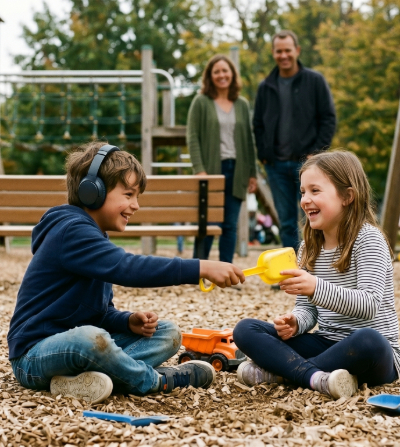
You get there at ten. He runs for the play structure and then he stops.
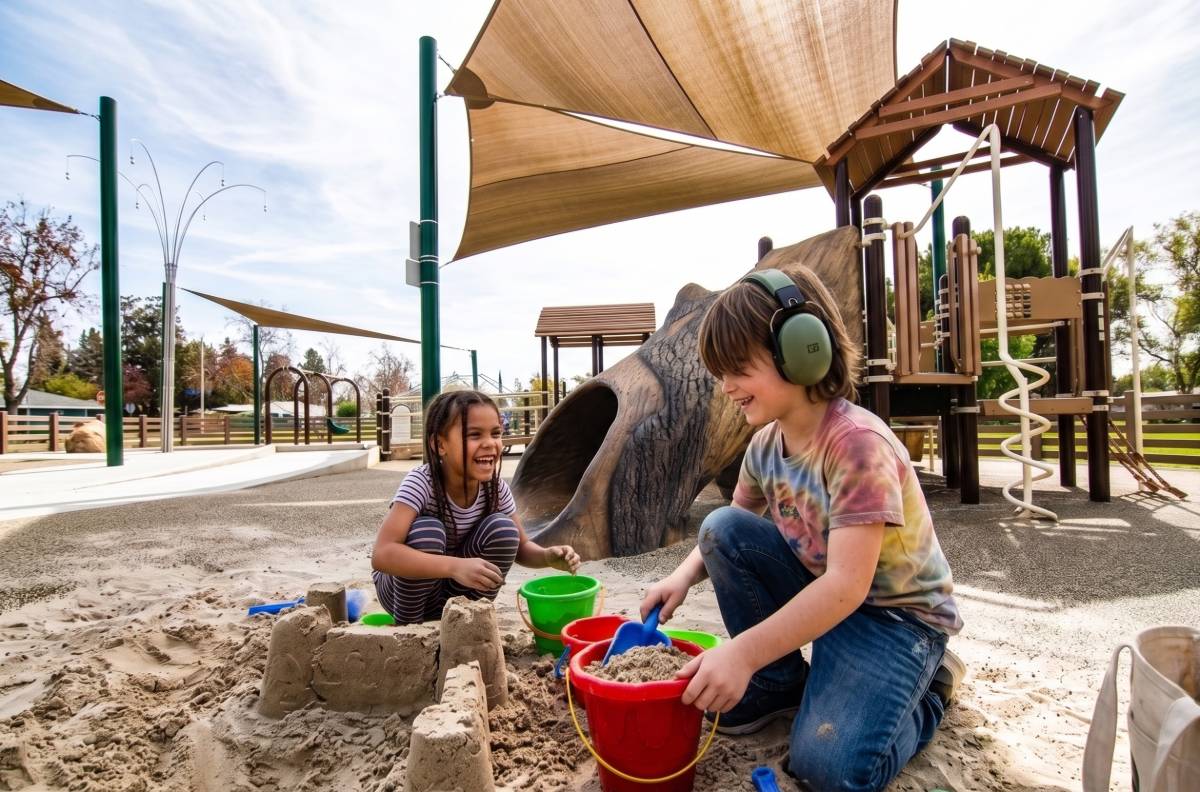
Not at the top. At the edge. Two feet from four kids doing something loud with a bucket.
He watches. He is not upset. He is not melting down. He is standing close enough to be part of it and not part of it.
You give it a minute, because last time you walked over and made it worse.
You give it five. You give it twenty.
You are on the bench doing the thing you always do, looking at your phone without reading anything on it, so you are not the parent staring at her own kid.
Then it is 10:40. The four kids have moved to the slide. He is still at the edge. So you say the thing you say. Okay bud, let's go.
He does not argue. That is the part that gets you.
In the car you run the same loop. He does not seem to mind. Maybe he likes being on his own. Maybe this is just who he is and you are the one making it a problem.
Somebody helped you get there. A teacher, a relative, an article that meant well:
He's happy in his own world.
He is not in his own world. He is stuck at the edge of this one.
He wants in. He does not know what to say, where to stand, or when to step in. So he waits for a gap. The gap closes. He freezes. You read the freeze as a choice, you give him space, and the pattern locks.
Here is what this article hands you.
- The four coaching moves, in order, that move a kid from the edge of a group into it.
- What to run at the kitchen table before you leave the house.
- How to fade yourself back over six to eight visits, until the ask is his and not yours.
And one thing to watch for. The visit where you know this is working is not the visit where he finally asks. It is a different one, and while it is happening it looks like a failure. That one is at the end.
Start with the change you can make tomorrow. Stop sending him out there to have fun. Give him something countable instead. Three asks. One round of catch. A kid who froze last time cannot aim at "make a friend," but he can aim at three.
Why does my autistic child stand alone at the playground?
Because the skill is missing, not the wish. The kid who looks checked out at the park is usually stuck, not content.
This is also where you find out the job is yours. A specialist teaches the script in a calm room, and that work matters. But a script he only uses in the living room, with an adult he trusts, is a different skill from walking up to a stranger at Lake Balboa.
Somebody has to be there when the real version happens. That person is you. You are the coach. It is not a job anybody handed you on purpose, and it is the one that decides whether any of the rest transfers.
Nobody trained you for that job, though. We can send a caring professional who was, to coach next to you. They have a master's degree and an average of 9.3 years of experience. Your child gets matched with someone who has already coached kids from the edge of a group into it. Your Regional Center pays, so it costs you $0. Start with who it is for, and see whether adaptive skills training is a fit.
How do I prep my autistic child before going to the playground?
At the kitchen table, hours before you go. Not in the car. Kids who try something new at the park rehearsed it earlier that day, sometimes earlier that week.
Cover three things: what the park looks like, what he is going to say, and what counts as a win.
Pull the park up on your phone. Walk through it out loud. "We're going to Reseda Park. We'll start at the swings. Then we're going to find one kid and you're going to say, can I have a turn." Then practice it. Have a sibling or the other parent play the part of a random kid.
Run the version where the kid says yes. Then run the version where the kid says no, or says nothing at all.
That second version matters more, because it is what actually happens most of the time.
- A photo of the specific park, walked through together before you leave.
- One line, practiced at home. "Can I have a turn?" is the best starter.
- A countable target. Three asks, or one round of catch.
- A snack in the car, so the exit does not become the meltdown.
How do I coach my child to talk to other kids at the playground?
Stand close. Whisper the line. Let him say it. Then stand further back next time. That is the whole method, and the two steps below are how it starts and how it fades.
Play ball-catch near the group, not in it
We start with ball-catch because it sidesteps almost every reason kids freeze. There is no conversation. The motion repeats. Each throw and catch takes two seconds and resets. And the shape of the game reads from twenty feet away, so a peer can wander over and join without anyone making introductions.
Pick a spot about ten feet from the busiest structure. Throw underhand. Two or three minutes, then break. Sometimes a kid drifts over, sometimes nobody looks up. Either way he just spent fifteen minutes doing a peer-shaped thing in full view of other children.
Whisper the line, let him say it, move back each visit
Parents trying this for the first time land at one of two extremes. They speak for their kid, or they sit on the bench hoping the ask happens by itself. Speaking for him skips the practice. Sitting thirty feet away skips it too, just more quietly. The work is in the middle.
Stand a step behind. When an opening shows up, lean in and say it quietly. "Can I have a turn." He repeats it. You step back.
If he freezes, wait. Two seconds feels like ten when you are standing there, but the words usually come if you let the silence sit.
By visit three you are a half step further back. By visit six you might be on the bench with a thumbs-up instead of a whisper. By visit eight, on a good run, you are not prompting at all. Some kids take longer. The speed is not the point. The fading is.
That is two of the four moves. The next one is where most of the actual progress happens, and it is not at the park.
How do I set up a playdate that actually builds social skills?
One peer. One activity. Forty-five minutes. Snack at the end.
Open-ended hangouts slide into parallel play, which stretches nothing. And two peers is almost always one too many. Your child has to track two sets of cues instead of one, and the two peers end up playing with each other.
Keep it small, short, and planned
Pick a kid your child already has a thin connection to. A cousin. A neighbor. The same-age kid from drop-off whose parent you have talked to twice. Pick a park he knows well enough that the layout is not one more thing to work out. Bring one shareable thing: bubbles, chalk, a soccer ball.
The shape protects everybody. Your child practices without holding it together for ninety minutes, and the other parent says yes to a second one because the first was not a disaster.
How do I reward playground social skills without bribing?
During the play, not after. Most parents start with a version of "play with three kids and you get ice cream on the way home." By then the link between the ask and the reward is gone.
Stack small rewards inside the visit
A high-five right after an ask, while he is still standing there, does more than a treat in the car. For a lot of kids the social reward is enough on its own. A real smile, a "nice ask," a hand on the shoulder. Start there. It is free and it works.
If he needs something more concrete, bring a tin and ten marbles. Each ask earns one. Five marbles convert to a small thing on the way home that you picked together before you left. A Hot Wheels car, a pack of stickers. Cheap enough to do every single time.
Which San Fernando Valley parks work best for practice?
The park matters less than you think. What matters: a contained perimeter if he bolts, more than one play area so you can move when the main one gets loud, and open grass for catch.
| Park | Why it works for practice | Best time to go |
|---|---|---|
| Aliso Canyon Park, Northridge | Fenced playground, quiet on weekday mornings, open grass right beside the play area | Weekdays before 10:30 |
| Lake Balboa, Encino | Several play areas, so you can move when the crowd shifts | Weekend mornings, weekday late afternoons |
| Reseda Park | Big central field, predictable layout, easy to plan a playdate around | Weekdays 3:30 to 5 |
| Holleigh Bernson Memorial Park, Porter Ranch | Newer equipment, calmer crowds, good for a first run | Weekday mornings |
Time of day matters more than which park. The same kid has a rougher visit at 4pm Saturday than at 10am Tuesday. Pick one home park and keep going back until the layout is boring. New parks come later, after the lines are solid.
Questions parents actually ask
How long before my child asks without being prompted?
Most kids get there somewhere around visit six to ten, if the prompting has been steady. Some take longer. What you are watching for is your own voice fading out, not a date on a calendar.
What if my child only wants to play with adults?
Normal, and not a problem. Adults are predictable, which is exactly why they feel safer. Start with catch with you, then one familiar peer, then the open playground. Do not skip the middle step.
What if the other kids ignore him?
Expect it. Some asks get a yes and some get nothing. Practice the walk-away-calmly version at home before you go. That one is worth more than it looks.
Should I tell the other kids my child is autistic?
Not as the opener. "He wants to play, he's still figuring out what to say" covers it for most kids. Save the longer conversation for an older kid who asks directly, or one you will see every week.
He gets overwhelmed at the playground. Should we still go?
Not when the goal is social practice. If he is already in sensory overload, none of the asking sticks. Go earlier, stay shorter, or find an emptier park. Busy Saturdays come later.
Does any of this work for older kids and teens?
Yes, with a different activity. The shared interest replaces the ball: trading cards, skating, a handheld game. The playdate might be a trampoline park instead of a playground. The structure does not change.
Here is the visit to watch for, the one promised at the top.
It is not the day he asks. It is the day he asks, and the kid says nothing, or says no, or is already running toward the slide and does not hear him.
And he turns around and comes back to you, and he is fine.
That is the one. Not because a no is good for him. Because the reason he froze was that a no felt survivable to nobody in your family. The day it is survivable, the skill is his.
So keep a marble in the tin for it. Double it when he joins a game he did not pick, or walks away from a no without falling apart. Those are the two hardest things here, and neither looks like a win while it is happening.
He will still stand at the edge sometimes. So does everybody. But he will not be stuck there, and he will know the way in, because you stood a step behind him and whispered it until he did not need you to.