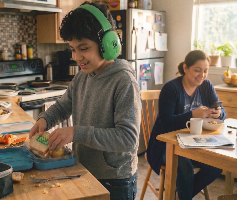
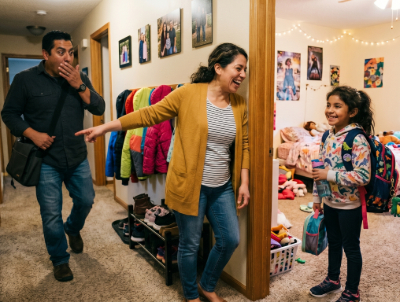
An IEP and an IPP split your child's day at the school bell. The IEP (Individualized Education Program) is your school district's plan, and it covers what your child needs to learn at school. The IPP (Individual Program Plan) is your Regional Center's plan, and it covers help at home and out in the community.
Ask the school for anything that happens between drop-off and pickup. Ask the Regional Center for evenings, weekends, summers and life at home. Many families have both plans at once, and the trouble starts when a need lands in the wrong one.
A Regional Center is a California agency that pays for services for people with developmental disabilities, like autism. We provide adaptive skills training, which Regional Centers pay for through the IPP, so weigh this page with that in mind.
| IEP | IPP | |
|---|---|---|
| Who pays | Your school district | Your Regional Center |
| What it covers | Learning at school: special education, therapy for school goals, an aide, the bus | Life at home and in the community: everyday skills, respite (breaks for you), camps |
| Who qualifies | A student whose disability gets in the way of learning | A person with a developmental disability, like autism, that the Regional Center confirms |
| Ages | 3 to 22 | 3 and up, with no upper limit |
| How often it's reviewed | At least once a year | At least every 3 years, or any time you ask |
| A meeting when you ask | Within 30 days of a written request | Within 30 days of your request |
Who pays for what: the school or the Regional Center?
The school district pays for what your child needs during the school day. The Regional Center pays for most of the rest. Health coverage, like Medi-Cal or your health plan, pays first for anything medical.
| What your child needs | Who pays first | Why |
|---|---|---|
| An aide in class | School district | It's part of the school day |
| Speech or occupational therapy for school goals | School district | It's written into the IEP |
| Help in the school bathroom | School district | Your child needs it to stay in class |
| Learning to use the bathroom, dress or cook at home | Regional Center | It's part of life at home |
| Tutoring and homework help | School district | Schoolwork is the school's job |
| The bus to school | School district | When the IEP includes it |
| Rides to a Regional Center program | Regional Center | It's the Regional Center's program |
| Summer school | School district | Called extended school year, for kids who would lose too much over the break |
| Summer camp and social outings | Regional Center | It's life in the community |
| Respite, a paid break for you | Regional Center | It's help for the family |
Look at the bathroom rows again. The same skill lands on both sides of the bell. At school, it's about staying in class. At home, it's about living in your own house.
So pick your words for the room. Tell the school how a skill gets in the way of learning. Tell the Regional Center how it gets in the way of life at home. Use home words at the school, and you'll often hear that it's a Regional Center service. Use school words at the Regional Center, and you'll hear the reverse.
For a lot of the families we talk to, the child's biggest goal sits in neither plan. It came up at both meetings. The IEP notes say the parent will check with the Regional Center, and the IPP never mentions it.
Why does each side say it's the other's job?
Because the Regional Center has to pay last. California law tells every Regional Center to look for other ways to pay first: the school district, Medi-Cal, private insurance. Your service coordinator is the Regional Center person who plans your child's services. They may call these other payers "generic resources." When they ask what the school is doing, they're following that rule.
The school district has its own rule. It owes your child a free education that fits their needs, plus the help it takes to get there. Once a service is written into the IEP, the district has to provide it.
Put the two rules side by side and you can see the gap. The Regional Center has to check with the school first. The school can say "that's a Regional Center thing" across the table and write nothing down. So the request bounces back and forth, and a school year goes by.
The fix is one piece of paper: the school's answer, in writing.
What to do when the school says it's a Regional Center service
Ask for the school's no in writing, before anyone stands up. When a school district turns down a request, federal law says it must tell you why, in writing. That letter is called prior written notice.
You can say it just like this: "If the district won't provide this, please put that in prior written notice with the reason."
Then watch. Some teams write it up, and you leave with the paper your Regional Center needs. Others take a second look. A reason on paper is harder to give than a sentence across a table.
Already had the meeting? You don't have to wait a year for the next one. Email your child's case manager, the teacher who runs the IEP, and ask for a meeting. In California, the district has to hold it within 30 days of your written request. School breaks longer than five school days don't count toward the 30.
What to send your coordinator when the school says no
One email, with the school's letter attached. Your service coordinator is the person at the Regional Center who plans your child's services and gets them paid for. The school's written no shows the school was asked first, which is what the pay-last rule needs to see.
Put four things in that email:
- The school's prior written notice, attached.
- The skill, in home words: using the toilet at home without help, or getting dressed on a school morning.
- The service you want, by name, like adaptive skills training or respite.
- A request to add the goal to the IPP, with an IPP meeting if it needs one.
The fourth one matters most. The Regional Center pays for services that work toward a goal in the IPP, so the goal comes first. Our piece on what an IPP is and how it works shows how to get one written in.
If your coordinator still points at the school, ask exactly what they need to see. Often it's a document, and now you know which one.
Can you have both an IEP and an IPP?
Yes. A child can have an IEP and an IPP at the same time, and plenty of Regional Center families do. The two plans cover different hours of the same child's day.
Bring a copy of the IEP to your IPP meeting. It shows the Regional Center what the school already covers, so nothing falls between the two plans.
Some goals belong in both plans, worded two ways. Using the toilet can be an IEP goal for the school bathroom and an IPP goal for the one at home. Each agency works on its half.
The two plans also end differently. The IEP ends when your child leaves school, at 22 at the latest. The IPP keeps going at every age. So the years before 22 are a good time to move skills like cooking, handling money and getting around town into the IPP.
How to choose where to ask
Start with when and where the skill happens. Then use these rules:
- During the school day. Ask the school district, through the IEP.
- At home, after school, on weekends or in summer. Ask the Regional Center, through the IPP.
- Medical, like therapy a doctor orders. Ask your health plan or Medi-Cal first.
- In both places. Ask both, in their own words, and get each answer in writing.
- No Regional Center yet. Ask the school anyway, because the IEP doesn't depend on the Regional Center.
The school is the better route for anything tied to learning. An IEP can even hold everyday goals, like packing a backpack, when they matter at school. But home skills happen at 7 a.m. and at bedtime, in your bathroom and your kitchen, every single day. A teacher can't stand in your hallway on a school morning.
Your bathroom and your kitchen are where we do our work. The one who comes is a caring professional with a master's degree, from a team with 9.3 years of experience on average. Your child gets someone who has already helped people stuck on that same skill. It's $0 to your family, because your Regional Center pays. Before the next IPP meeting, see if your child could use adaptive skills training at home.
One of the biggest misconceptions parents have is that adaptive skills training will cost them IHSS or respite hours. IHSS (In-Home Supportive Services) is the county program that pays for care at home. Adding adaptive skills training won't lower IHSS or respite. The state tells counties to set IHSS hours as if the Regional Center paid for nothing at all.
Questions parents actually ask
Does the Regional Center pay for tutoring?
Usually not. Schoolwork is the school district's job, and the Regional Center can't pay for what the school owes your child. Ask for help with reading or math through the IEP.
If we add adaptive skills training, do we lose IHSS or respite hours?
No. Adding it won't cut IHSS hours, and it won't cut respite either. Each county has to leave out Regional Center care when it sets IHSS. The state put that in writing.
Does the school's speech device or tablet come home?
It does when the IEP team decides your child needs it at home to keep learning. Ask for that decision in the IEP itself. A promise in the hallway is gone when the staff changes.
What if my child doesn't have a Regional Center yet?
Keep asking the school, because the IEP doesn't depend on the Regional Center. Regional Center services start with an eligibility check, which is a separate step.
Will asking for everything in writing make me the difficult parent?
Maybe a little. It also makes you the parent with dates in the file. Both systems run on written requests, and everyone at that table has handled plenty of them.
Who pays once my child turns 22?
The Regional Center, through the IPP. The IEP ends when school does, but the IPP has no upper age limit. Adult skills like cooking and getting to work move there.