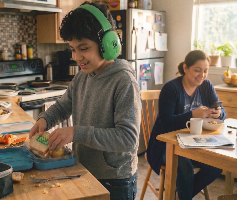
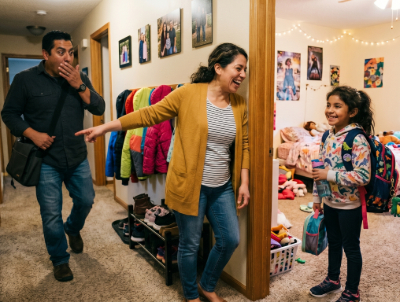
Regional Center respite care pays for someone to watch your family member for a few hours, so you get a break. It's free, and it's for any age, as long as they live at home with family. Your Regional Center sets the hours with its own assessment.
At most Regional Centers, the typical child gets 20 to 30 hours of respite a month, based on the state's 2025-26 numbers. Some families get more, and the way to ask for more is the same everywhere.
What does Regional Center respite pay for?
Respite pays for care and supervision while you step away: to rest, run errands, or be with your other kids. It comes in two kinds.
- In-home respite. A worker comes to your home and watches your family member there. This is the kind most families use.
- Out-of-home respite. Your family member stays a short time in a licensed home. Centers often limit a stay to about three weeks.
Respite is for your break, so it isn't day care. Westside Regional Center says it plainly: respite doesn't cover work hours for working parents. For a person with high medical or behavior needs, some centers also fund respite with nurses or behavior staff.
California Department of Developmental Services: In-Home Respite The state's one-page guide to respite and the ways to get a worker →How many respite hours can you get?
There's no state limit anymore. California dropped its cap on respite in 2018. Now each Regional Center decides with its own assessment, and has to post that tool online. Here's how the three Los Angeles centers we work with do it:
| Regional Center | How it decides | Hours it lists |
|---|---|---|
| NLACRC | Your coordinator maps a normal week with you | No set ranges |
| Westside | A points sheet | 7 to 42 hours a month |
| ELARC | A points sheet | Up to 5 to 30 hours a month |
All three can go higher by exception, for extra medical or behavior needs or a hard stretch at home. What usually raises the number:
- Behavior or medical needs a sitter couldn't handle.
- A single parent, a parent with health problems, or more than one child with a disability.
- Few hours at school or a day program.
- An adult family member who still needs care around the clock.
IHSS can lower the number in one case. Westside and ELARC count IHSS hours only when those hours already give you the break. NLACRC's tool asks how many IHSS hours you have and who gives them.
Who can be your respite worker?
You have three ways to get a worker, and you can choose:
- An agency sends one. The agency hires, trains, and schedules the worker.
- You pick someone you trust, and the agency hires them to work only for your family. The state calls this Employer of Record. The worker has to be 18 or older, CPR certified, and live outside your home.
- You hire the worker yourself. A payroll company the Regional Center pays sends their checks. The state calls this participant-directed respite.
A grandparent, an aunt, an adult sibling, or a friend can be the worker. The parent who needs the break can't be paid for respite. That's the point of it.
How to ask your Regional Center for respite
Ask your service coordinator, in writing. Describe a normal week: the hours you can never step away, and what happens if you try. Our guide to reaching your service coordinator helps if they're slow to write back.
Your coordinator then fills out the center's respite assessment with you. Asking for a new service means an IPP meeting, the meeting where your family member's plan is written. The Regional Center has to hold it within 30 days, or within 7 days when health and safety are at risk. Before you leave, you get a signed list of the services you agreed on, with the start date if it's known.
If the agency can't find a worker, ask to switch to a worker you pick. The hours were approved for your family, not for one agency.
Respite gets you the afternoon back. When the worker leaves, the same jobs are waiting: the same help getting dressed, the same meal you still make for them.
Adaptive skills training works on those jobs themselves. We send a caring professional with a master's degree and 9.3 years of experience on average. They're matched to your family member because they've already helped people learn the same skills. It's $0 through your Regional Center, and it costs you no respite hours. Ask whether adaptive skills training belongs next to respite in your plan.
Respite, IHSS, and adaptive skills training
Parents mix these three up all the time, and many families have all three at once. The misconception we hear most is that one cancels another: that starting adaptive skills training will cost you respite or IHSS hours. It won't. Adding it doesn't lower your respite. For IHSS, the state has told counties, in writing, to leave Regional Center services out when they set IHSS.
| Respite | IHSS | Adaptive skills training | |
|---|---|---|---|
| Who pays | Your Regional Center | Your county | Your Regional Center |
| What it's for | A break for the family | Daily care at home | Teaching everyday skills |
| Who does it | A worker, often someone you pick | A paid provider, often a parent | A professional who teaches |
| How to ask | Your service coordinator | Your county IHSS office | Your service coordinator |
IHSS has its own extra help for a child who can't see danger, called protective supervision.
Questions parents actually ask
Is Regional Center respite free?
Yes. The family fee that once applied to some respite ended in July 2024.
Can a grandparent or older sibling be our respite worker?
Yes, if they're 18 or older and can legally work. Go through an agency or hire them yourself. If they live with you, ask your center which way works.
How much does the Regional Center pay for respite?
As of July 2026, Los Angeles centers pay agencies about $36 to $37 an hour. For a worker you hire yourself, the rate is $25.33 an hour, and the worker's pay comes out of that.
Can an adult still get respite?
Yes. There's no age limit, as long as they live at home with family who need a break.
Will we lose respite hours if we ask for camp?
No. Your Regional Center can't make you trade respite hours for camp or social recreation. State law has said so since 2023.
If we start adaptive skills training, do our respite or IHSS hours go away?
No. Not one hour of either goes away. The state says Regional Center services can't be used to shrink IHSS. Here's that rule.